 THE GLOWNIQUE
Backlit Signage vs Light Box Signs: Which Illuminated Sign Belongs on Which Wall
Backlit signage borrows the wall to cast an architectural halo, making it permanent, sculptural, and reliant on the surface behind it. An ultra-thin LED light box sign carries its own light guide plate and changeable graphics. Compare illumination optics, standoff distances, wall finish compatibility, ADA protrusion limits, and the hybrid framework where both formats excel together.
Key takeaways
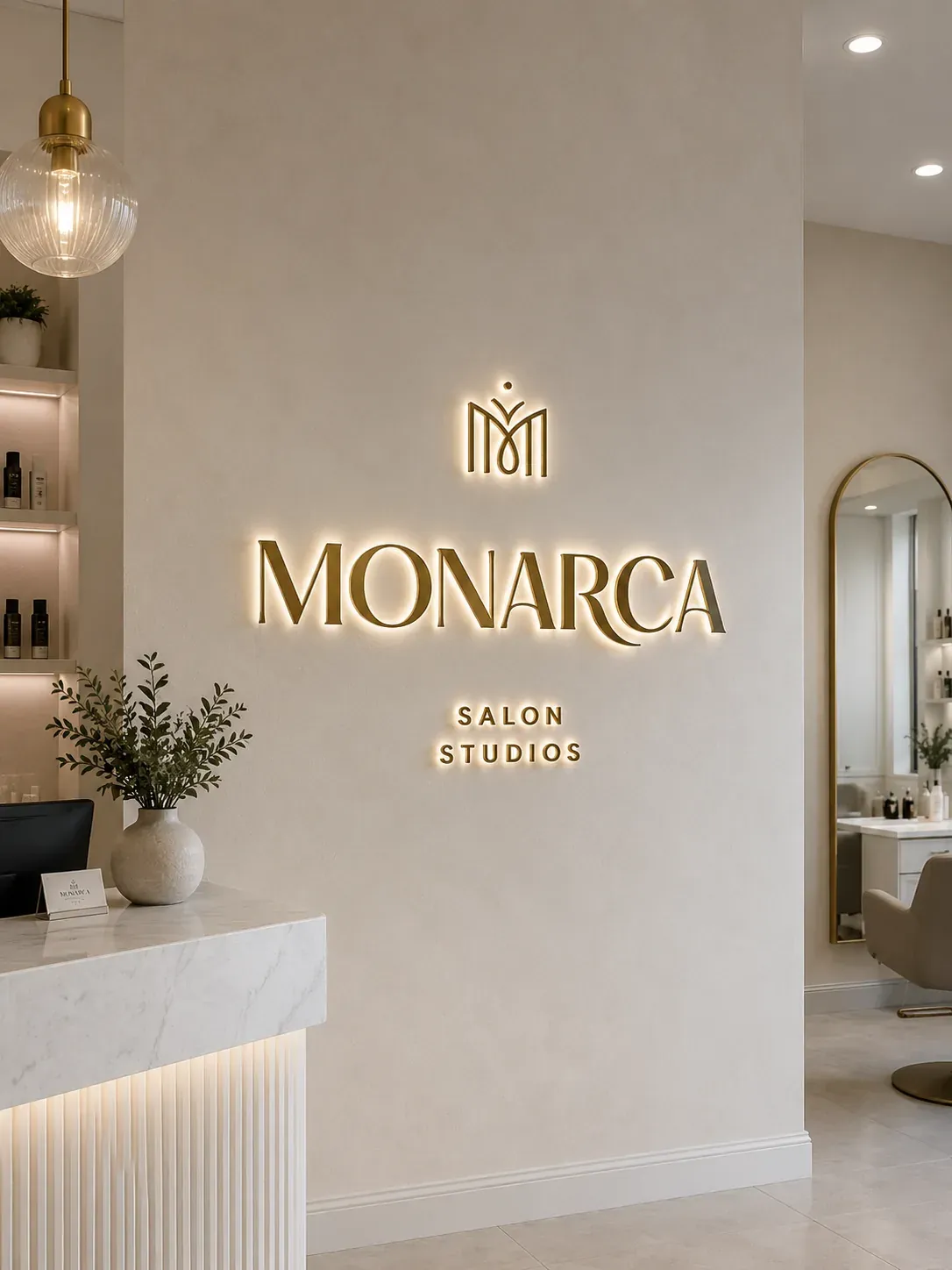
- Backlit signage uses indirect illumination: solid metal faces direct LED light backward so the wall reflects a soft halo, making the wall finish a functional optical component.
- Ultra-thin LED light box signs use edge-lit light guide plates (LGP) to turn side-firing LEDs into uniform front-facing light inside a slim 25mm frame, completely independent of the wall.
- Halo backlit letters are permanent architectural fixtures ideal for reception brand marks and photo backdrops without lens glare.
- Light box signs excel at frequently changing messages—such as café menus, pricing tiers, and seasonal promotions—with tool-free snap-frame graphics updates.
- High-end commercial venues rarely choose just one: the standard architectural standard pairs a halo-lit brand wall with ultra-thin light boxes for operational information.
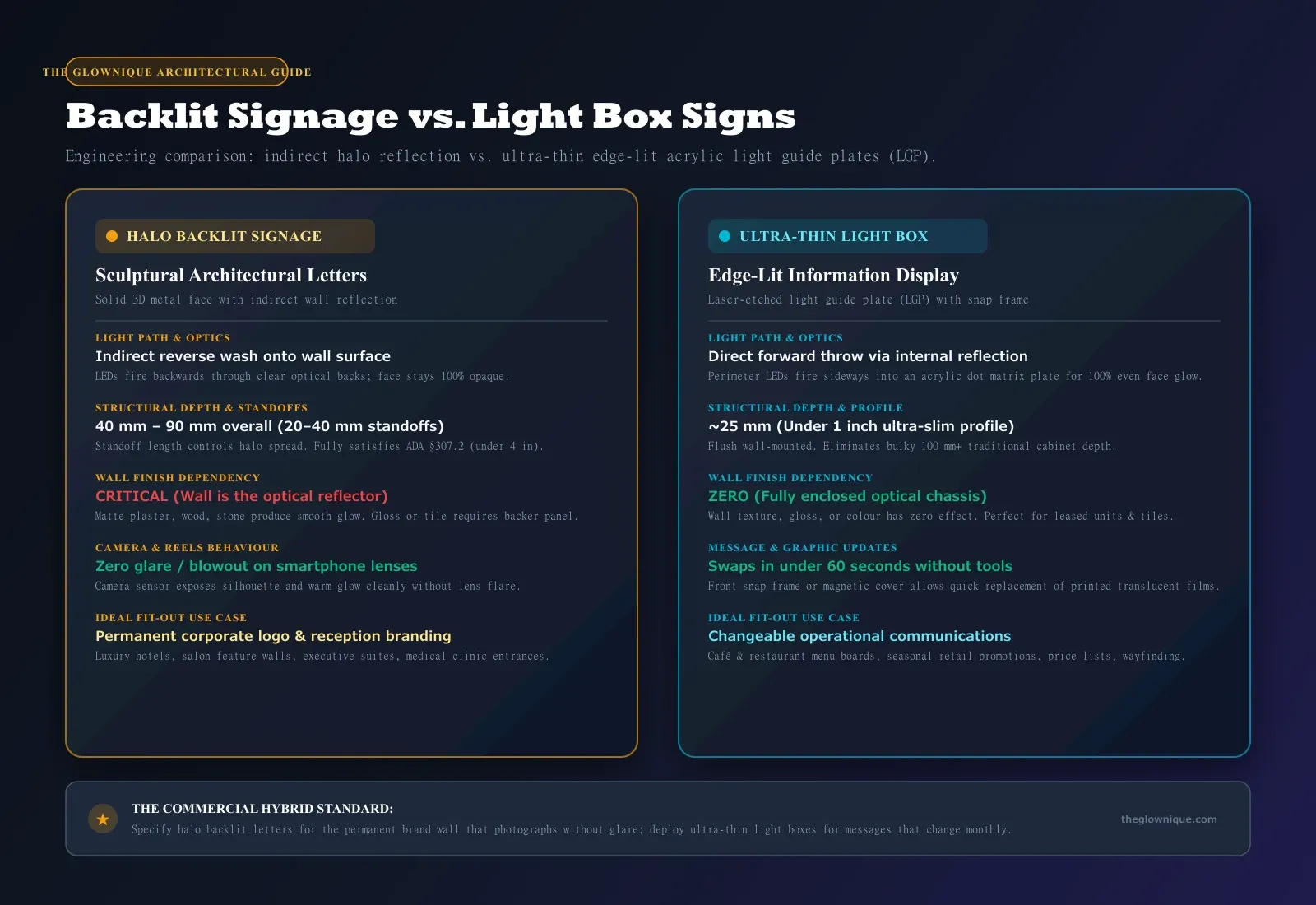
Backlit signage uses indirect illumination where solid 3D letters fire low-voltage LEDs backward to cast an architectural halo against the wall, whereas a light box sign is an ultra-thin (25 mm) enclosed frame using edge-lit acrylic light guide plates (LGP) to illuminate changeable graphics from behind. Backlit letters create permanent, glare-free brand focal points; light boxes deliver changeable, high-contrast menus and promotions.
When planning a commercial interior—whether fitting out a corporate reception, medical clinic, boutique salon, café, or retail showroom—choosing between backlit signage and an LED light box sign is one of the most critical aesthetic and functional decisions you will make. However, most online comparison guides still compare bulky 100 mm fluorescent exterior cabinets against neon glass tubes. In modern commercial architecture, the real decision is between sculptural, indirect dimensional lettering and sleek, flush-mounted edge-lit display panels.
This comprehensive engineering guide breaks down the optical physics of both illuminated formats, examines standoff spacing and wall reflectance (LRV), decodes ADA walkway protrusion rules, and details the commercial hybrid framework where both signs work together seamlessly.
What is backlit signage, and what is a light box sign?
To specify the right signage for your architectural space, it is essential to understand the structural and optical distinctions between these two LED technologies:
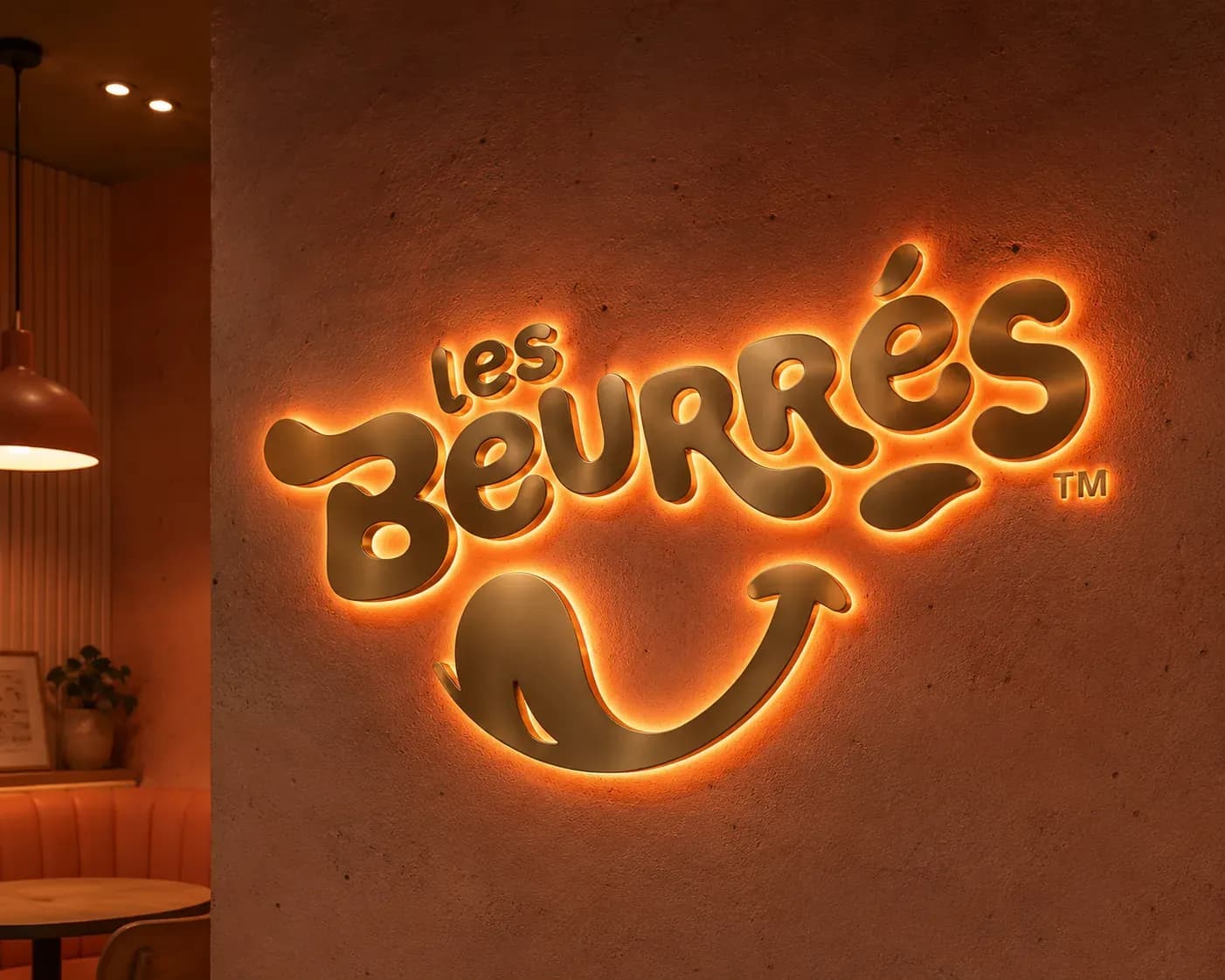
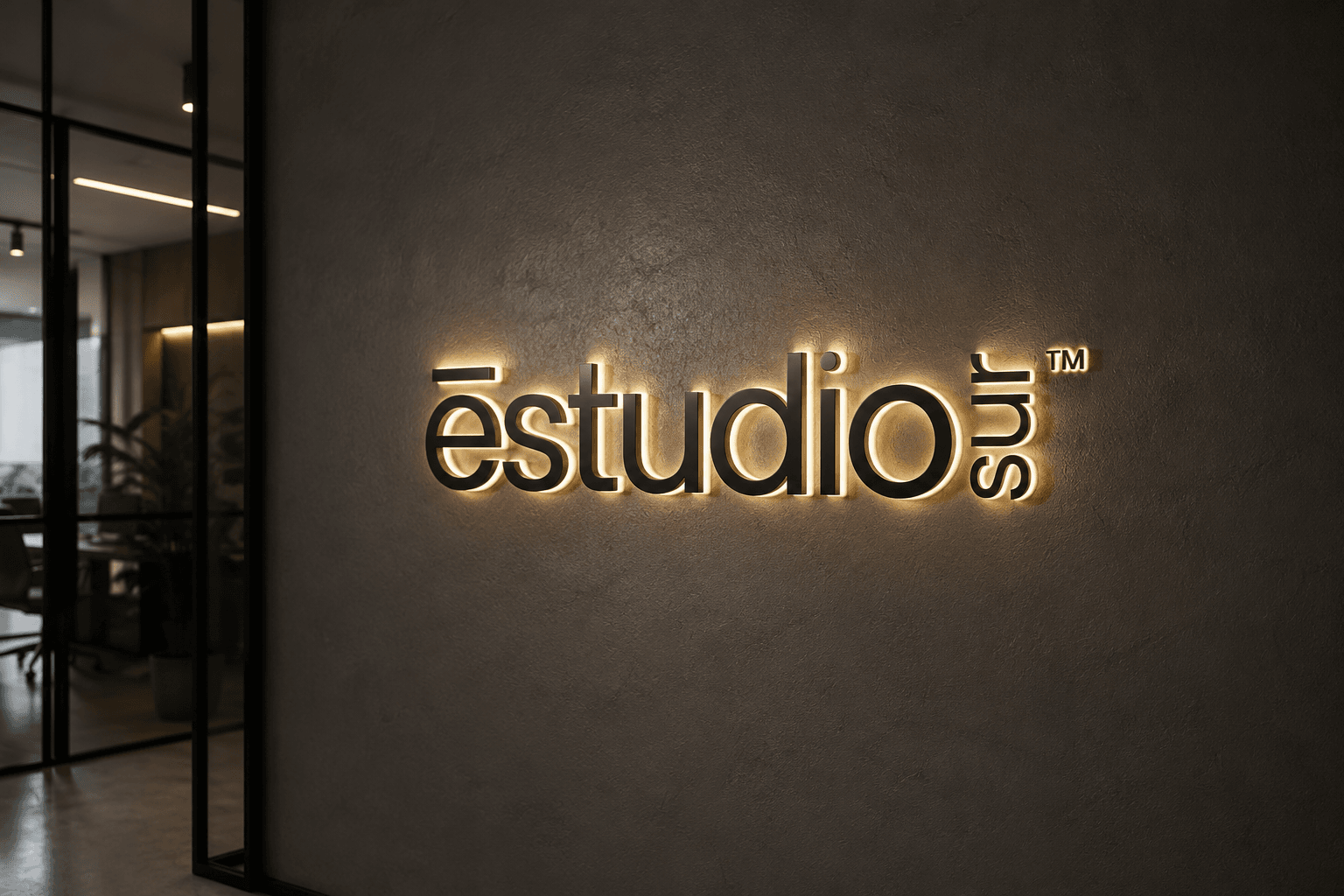
- Halo Backlit Letters (Reverse Channel Letters): Each dimensional letter or logo mark is custom-fabricated from solid metal (typically 304/316 architectural stainless steel or welded aluminum) with a completely opaque front face and a clear optical polycarbonate back. Internal 12V or 24V LED modules fire backward onto the mounting surface. Mounted off the wall on stainless steel standoffs, the light spills outward around each letter's silhouette, creating a distinctive luminous aura or halo. The face itself remains unlit, creating high daytime presence and luxurious nighttime ambiance. Explore our workshop's 3D metal backlit letters for commercial reception walls.
- Ultra-Thin LED Light Box Signs (Edge-Lit Displays): An ultra-thin light box is a sealed, rigid aluminum chassis engineered to an ultra-slim depth of approximately 25 mm (under 1 inch). High-efficiency LED strips line the interior perimeter of the frame, directing light sideways into a precision-engineered acrylic light guide plate (LGP). Total internal reflection coupled with laser-etched dot matrices disperses light forward evenly across the entire face, brightly illuminating translucent printed graphics held beneath a snap-frame or magnetic cover. View our commercial ultra-thin light boxes for menus and retail displays.
- Traditional Cabinet Light Boxes: Deep rectangular metal boxes (typically 100 mm to 150 mm deep) with rear-mounted fluorescent or LED modules. While historically common on exterior commercial storefronts, deep cabinet boxes are bulky, cast harsh light, and are rarely specified for refined interior architectural fit-outs today.
How halo lit backlit letters make their light
The defining characteristic of halo backlit signage is that light never travels directly toward the viewer's eyes. Instead, photons leave the rear cavity of the letter, strike the wall surface behind it, and reflect back into the room. This indirect optical path introduces three critical architectural considerations:
The wall is an optical component of the sign
Because light bounces off the mounting surface, the wall's texture, finish, and Light Reflectance Value (LRV) directly dictate the halo's appearance. The trade standard calls for a matte, mid-to-light wall finish:
- Matte White or Off-White Plaster: The ideal optical surface. Diffuses the backward LED throw into a broad, soft, perfectly uniform halo wash without hot spots.
- Light Timber, Birch, or Sandstone: Produces a warm, organic glow that complements 3000K soft white LEDs, adding rich texture to the surrounding space.
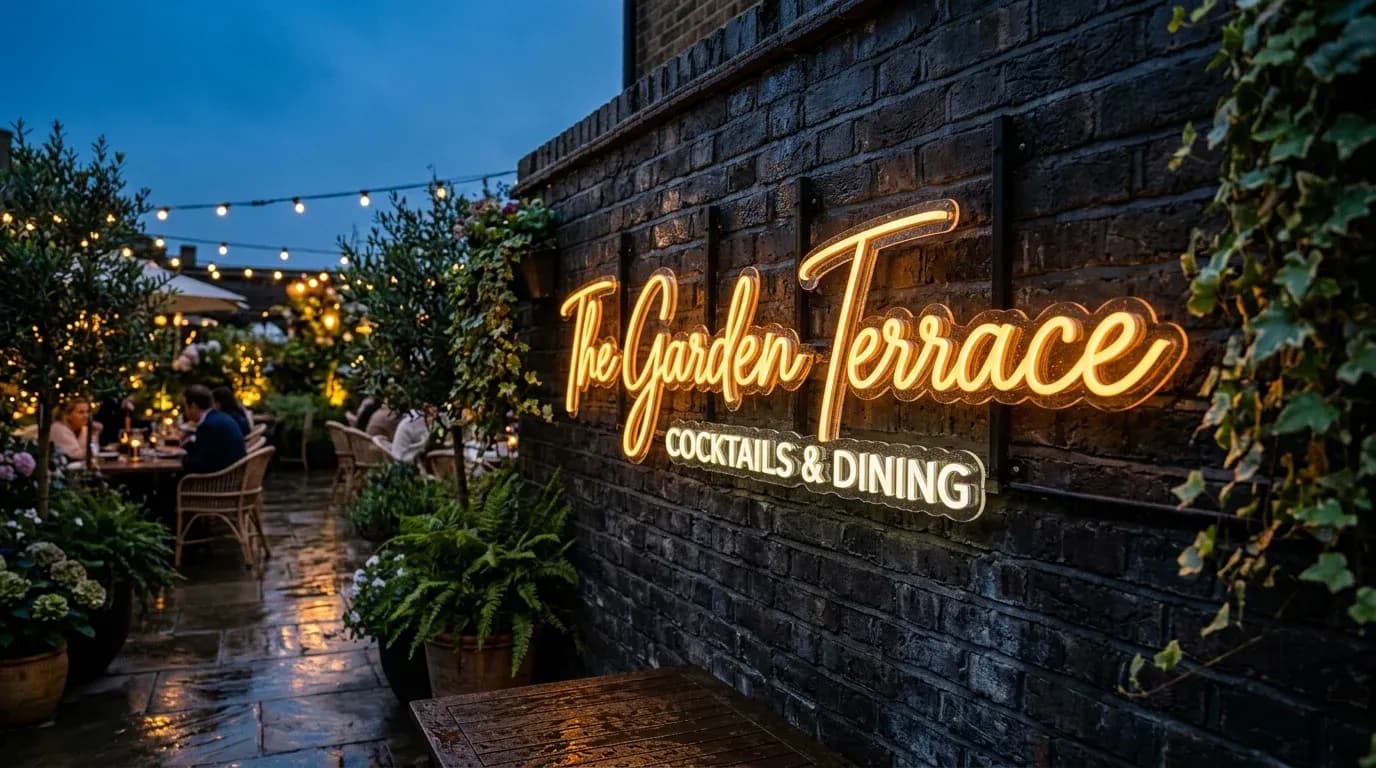
- Dark Matte Paint (Charcoal, Deep Navy, Forest Green): Absorbs approximately 70% to 85% of reflected lumens. The result is a dramatic, high-contrast, moody outline rather than a broad room wash—ideal for cocktail lounges and upscale steakhouses, but less suitable for healthcare clinics.
- Gloss Paint, Polished Marble, Glazed Tile, or Mirror: High-gloss finishes reflect specular images of the individual LED diodes, turning what should be a smooth halo into an unappealing cluster of bright dots while exposing mounting hardware. When mounting halo letters on gloss tile or dark masonry, we fabricate a custom matte backer panel—a thin aluminum or polycarbonate backboard mounted first—to restore a controlled optical surface.
Standoff distance and optical wash
Standoffs are precision-machined metal spacers that hold each letter away from the wall. The standoff distance determines the focal spread of the halo:
- Short Standoffs (15 mm to 20 mm): Confine the light close to the perimeter of the letter, creating a crisp, intense, and tightly defined outline.
- Standard Architectural Standoffs (25 mm to 35 mm): The optimal balance for 12-inch to 24-inch letters, delivering a soft, expansive feathering effect that extends smoothly outward.
- Excessive Standoffs (Over 50 mm): Cause the light to scatter too widely, diluting the luminance and causing individual letter halos to blend into an indistinct ambient blur.
Why halo signage photographs without camera glare
Smartphone camera sensors struggle with direct, forward-facing light sources. When a camera frames a front-lit sign, the high-intensity diodes force the sensor to underexpose the surrounding room, plunging patrons and interior decor into darkness while blowing out the sign letters into a blinding white glare.
Halo backlit signage completely solves this problem. Because the camera lens sees only an opaque metal silhouette framed by diffuse reflected light, both the brand name and the surrounding room expose perfectly in customer selfies, Instagram stories, and corporate video interviews. For boutique salons, hotel lobbies, and aesthetic practices where organic social media sharing drives business, this optical advantage is paramount.
How an ultra-thin LED light box sign makes its light
An ultra-thin LED light box sign solves an entirely different commercial requirement: delivering vibrant, high-contrast, full-color graphics from an enclosure with virtually no physical footprint.
Edge light turned forward via light guide plates (LGP)
Traditional lightboxes placed LED bulbs directly behind a translucent panel, requiring 4 to 6 inches of cabinet depth to prevent unsightly bulb hot spots. Modern slim lightboxes eliminate this depth by employing optical physics:
- Perimeter LED Strips: High-density LED arrays are mounted along the interior edges of an extruded aluminum frame, firing light horizontally into the narrow edge of an optical-grade acrylic sheet.
- Total Internal Reflection: Light travels through the acrylic sheet by bouncing between its polished front and back surfaces.
- Laser-Etched Dot Grid: The rear face of the acrylic sheet is etched with a microscopic grid of laser-etched dots or V-cut grooves. Each dot disrupts internal reflection, redirecting photons forward at a 90-degree angle toward the viewer. The dots are spaced progressively closer together toward the center of the panel to compensate for light falloff, guaranteeing 100% uniform edge-to-edge brightness.
- Diffuser & Reflective Backer: A bright white PET reflector behind the plate redirects stray backward light forward, while an optical front diffuser eliminates micro-patterns, yielding a perfectly homogeneous illuminated face within a 25 mm slim chassis.
Independence from wall finish and surface texture
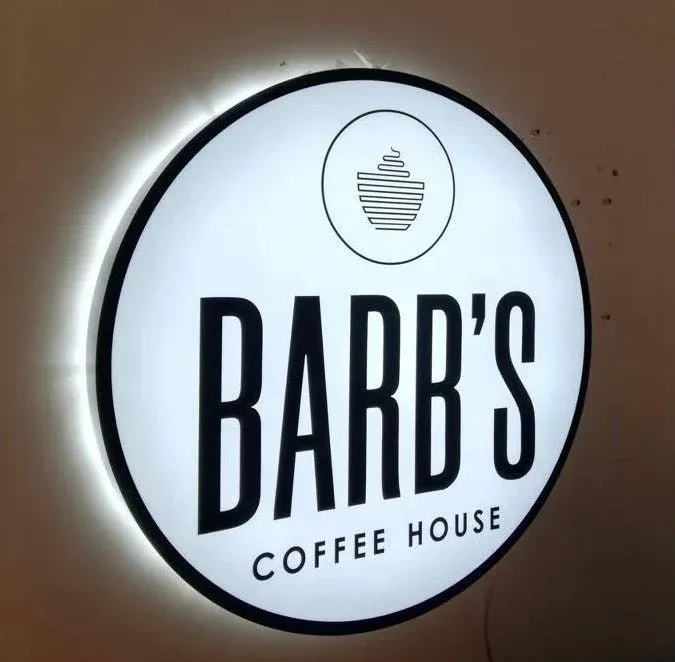
Unlike halo backlit signs, an ultra-thin light box is a self-contained optical chamber. The surface behind it has zero impact on the visual output. Whether installed on exposed rough brick, corrugated steel, glossy subway tile, or dark wallpaper, the illuminated graphic looks identical. This makes slim lightboxes the premier choice for leased retail units, pop-up stores, and commercial tenancies where modifying the landlord's wall finish is prohibited.
Quick-change graphics for active communications
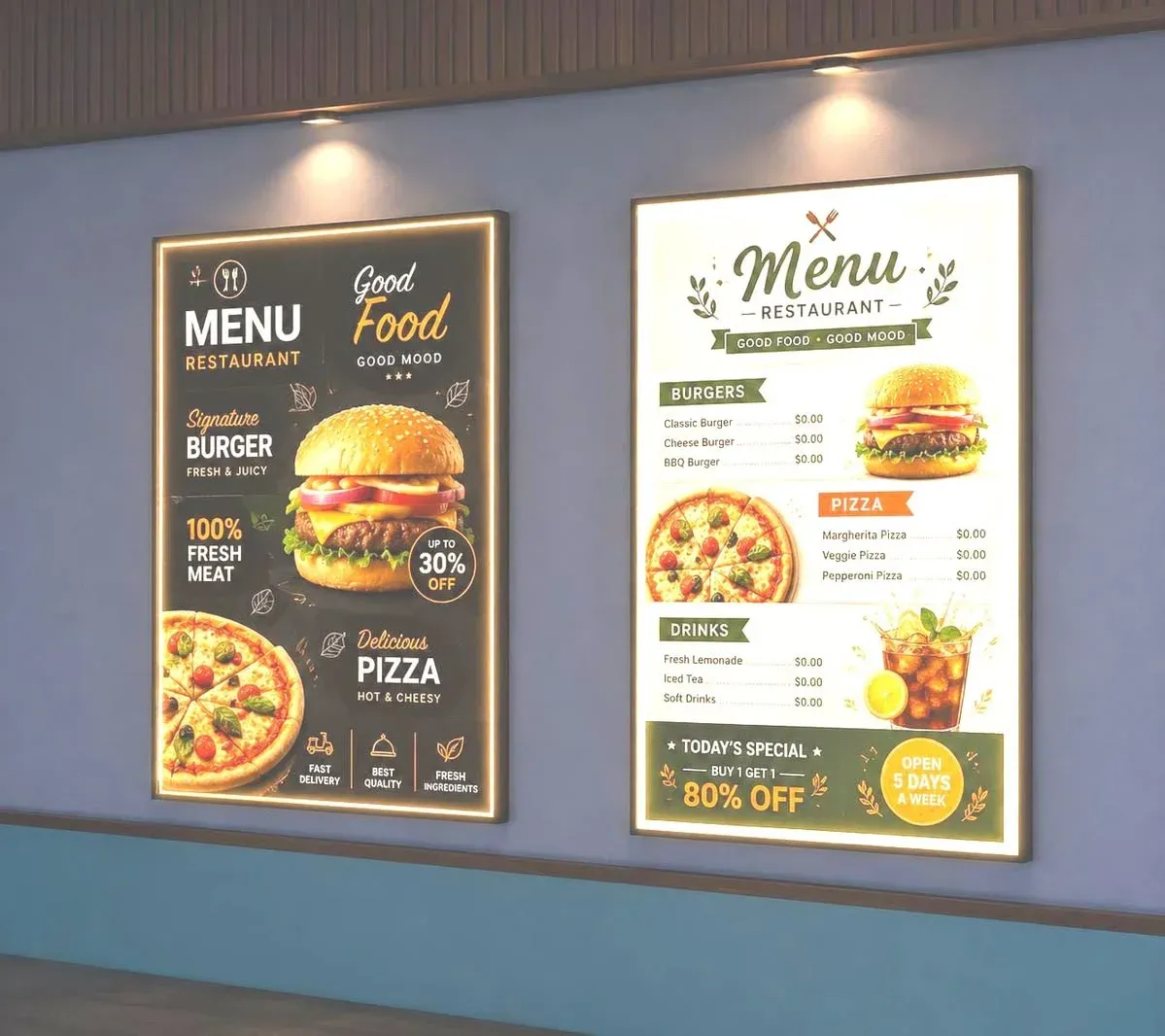
The structural chassis of an ultra-thin light box is permanent, but its message is completely dynamic. The graphic is printed on high-density translucent backlit polyester film that produces deep, saturated blacks and crisp typography when illuminated.
Featuring snap-open aluminum edges or magnetic front covers, updating the graphic requires zero tools, zero ladders, and zero technical expertise. A restaurant manager can update seasonal menu prices, a beauty salon can swap promotional treatment packages, or a retail store can launch a holiday campaign in less than 60 seconds simply by snapping open the frame and sliding in a fresh print. Explore our dedicated restaurant signage solutions to see slim menu boxes in commercial applications.
Backlit signage vs light box signs: Side-by-side engineering comparison
To evaluate which illuminated technology matches your specific architectural requirements, review this workshop specification matrix:
| Engineering parameter | Halo backlit dimensional signage | Ultra-thin LED light box sign |
|---|---|---|
| Optical light path | Indirect reverse throw; bounces off wall surface | Direct forward throw via edge-lit light guide plate |
| Structural depth off wall | 40 mm – 90 mm (Letter depth + standoffs) | ~25 mm flush-mounted aluminum frame |
| Wall finish dependency | High; requires matte, mid-to-light wall or backer panel | Zero; completely independent of wall substrate |
| Graphic content capabilities | Solid dimensional letters, logos, single/dual tones | Full-color photography, fine typography, price lists |
| Graphic changeability | Permanent; requires physical metal refabrication | Instant; swap translucent film in under 60 seconds |
| Daytime presence (unlit) | Exceptional; 3D metal returns cast real shadow lines | Neutral; framed graphic panel |
| Glare on smartphone cameras | Zero glare; perfect for selfies and video reels | High forward contrast; excellent for reading menus |
| Primary architectural role | Brand identity anchor and focal centerpiece | Operational communication and promotional rotation |
Which illuminated sign belongs on which wall?
Choosing between these two formats becomes straightforward when you define the communication lifecycle of the sign:
- Choose Halo Backlit Signage if: The element is your permanent company name or corporate logo that will remain unchanged for years; the installation sits behind a reception desk, bar back, or lobby feature wall; the wall is smooth plaster, timber, or painted drywall; and you want customers to take photographs in front of it without harsh glare.
- Choose an Ultra-Thin Light Box if: The content includes itemized menus, pricing tiers, hours of operation, seasonal drink specials, or lifestyle photography; the graphic needs to be updated quarterly, monthly, or weekly; or the wall is high-gloss ceramic tile, rough stone, or rented drywall where drilling multiple letter anchors is impractical.
- Choose Double-Sided Light Boxes if: The sign hangs in a street-facing storefront window to communicate promotions to pedestrian sidewalk traffic outside while simultaneously greeting customers inside.
- Choose Front-Lit Channel Letters if: Your primary objective is long-distance vehicular legibility from across a 4-lane highway or commercial shopping plaza parking lot. Review our engineering comparison of front-lit vs halo-lit vs dual-lit channel letters to evaluate long-range optics.
- Choose UV-Printed Acrylic if: Your corporate logo features multi-color gradients, intricate heraldic crests, or micro-line illustrations that cannot be formed from sheet metal channels. Review our technical guide to custom acrylic signs for office walls.
The commercial hybrid framework: Why leading fit-outs use both
Experienced commercial architects and retail interior designers rarely treat illuminated signage as an "either/or" purchase. Instead, the gold standard in commercial fit-outs is a deliberate hybrid signage layout: pairing one permanent, sculptural halo sign for brand equity with ultra-thin lightboxes for operational messaging.
Café and restaurant floor plans
In modern coffee houses and fast-casual dining venues, a brushed-metal halo backlit logo is positioned directly behind the point-of-sale register or espresso machine at standing eye level. Two or three identical ultra-thin light boxes are mounted directly above or adjacent to the counter as illuminated menu boards. The halo sign establishes the warm, artisan aesthetic of the brand, while the lightboxes allow the management to update coffee bean origins, seasonal lunch specials, and pricing without disturbing the primary brand wall.
Clinic and medical reception suites
In dental practices, cosmetic clinics, and medical spas, trust and clinical prestige are paramount. A warm 3000K or neutral 4000K halo backlit logo mounted on an acoustic timber slat or limestone reception wall immediately puts patients at ease. In the adjacent consultation corridors and patient waiting lounges, slim snap-frame lightboxes display physician credentials, treatment menus, and procedure overviews in clean, well-lit formats. Discover tailored applications on our office signage solutions hub.
Salon, boutique, and luxury hospitality lobbies
High-end beauty salons, boutique hotels, and retail apparel stores live on visual storytelling. The reception feature wall serves as the dedicated "social photo wall," where clients take photos following styling appointments. A halo-lit logo in brushed brass, matte black, or rose gold delivers an upscale background without washing out skin tones or creating camera lens flares. Secondary lightboxes are positioned discreetly near treatment rooms or checkout displays to feature retail skincare brands and promotional packages. Explore options on our salon and spa signs page.
Structural mounting, power driver placement & electrical compliance
The most common reason commercial buyers hesitate when specifying architectural signage online is uncertainty around electrical connections, wire concealment, and building code compliance. Here is how our workshop structures each installation:
Where does the low-voltage LED driver live?
Both halo backlit letters and ultra-thin light boxes operate on safe, low-voltage direct current (12V or 24V Class 2 DC). Mains 110V/240V electricity never connects directly to the sign face. Instead, an external solid-state LED driver (transformer) converts high-voltage wall power into regulated low-voltage output.
Because the driver generates mild ambient heat, it requires adequate ventilation and convenient access for future maintenance. The three most common driver placements are:
- Inside an Adjacent Cabinet or Credenza: The driver is plugged into a dedicated outlet inside a reception desk cabinet, service counter, or back-bar cupboard, with low-voltage wiring fished through the rear drywall.
- Above a Suspended Drop Ceiling: Placed inside a ceiling plenum or above an access hatch, keeping the primary wall 100% free of electrical hardware.
- In a Mechanical Closet: For large corporate fit-outs, drivers can be centralized in a nearby utility room, provided wire gauge is calculated to prevent low-voltage direct-current drop over extended wire runs.
Trade rule: Never bury a wire splice inside closed drywall. All low-voltage connections should lead directly to the driver or terminate in an accessible junction box.
Mounting templates, wall anchors, and substrate rules
Every custom halo backlit sign ships from our workshop with a full-scale 1:1 paper mounting template. The template maps every letter contour, precision standoff anchor hole, and wire pass-through hole with a printed horizontal leveling reference:
- Plasterboard & Drywall: Standoffs landing over vertical wall studs are anchored with architectural wood screws. Standoffs landing between studs utilize commercial heavy-duty hollow-wall toggle bolts or zip-anchors rated for 50+ lbs shear strength.
- Solid Brick, Concrete, & Masonry: Holes are drilled using a masonry hammer drill bit, clearing dust before tapping in expansion sleeve anchors. Never anchor directly into soft mortar joints; shift the template slightly to hit solid brick face.
- Ceramic Tile, Marble, & Granite: Requires diamond core hole saws running at low RPM with water cooling to prevent thermal cracking. For brittle stone walls, our workshop strongly recommends mounting halo letters onto a clear or tinted acrylic backer plate first, reducing stone wall penetrations from 30+ holes down to just 4 perimeter corner anchors.
ADA walkway protrusion limits (§307.2)
In commercial corridors, hospitality hallways, and public circulation paths across the United States, signage must comply with the Americans with Disabilities Act (ADA) Standards for Accessible Design. Under ADA §307.2, wall-mounted objects with leading edges between 27 inches and 80 inches above the finished floor must not project more than 4 inches (100 mm) into the circulation space to protect visually impaired pedestrians using canes.
Ultra-thin light boxes have an overall profile of approximately 25 mm (1 inch), comfortably exceeding ADA standards. Halo backlit signs fabricated with 1-inch returns and 1-inch standoffs measure approximately 50 mm (2 inches) overall, remaining well within legal safety clearances.
Exterior moisture, damp locations, and IP ratings
When specifying illuminated signage for covered outdoor patios, building porticos, or high-humidity spa treatment rooms, verifying moisture protection is critical. Under IEC 60529 standards, component IP ratings indicate ingress resistance:
- IP65 Rated Assemblies: Protected against low-pressure water jets and multi-directional spray; ideal for covered outdoor entryways and restaurant patios.
- IP67 Rated Assemblies: Hermetically sealed against temporary submersion and heavy torrential rain; standard for exposed building facades.
Crucially, an installed sign's weather resistance is only as robust as its cable entry seal. For all damp and outdoor installations, low-voltage wires must exit through siliconed drip loops to ensure water cannot track along the wire harness into the interior wall cavity.
What to send our workshop for a custom architectural mockup
Before cutting any metal or assembling LED arrays, The Glownique provides a complimentary, scaled architectural digital mockup showing your sign rendered directly onto your physical wall photo. To request a free technical mockup, submit:
- Vector Logo Artwork: Your corporate vector logo file in AI, EPS, SVG, or high-resolution vector PDF format.
- Straight-On Wall Photograph: A clean photograph of your wall taken head-on in natural daylight, and a second photograph at night under normal room lighting.
- Wall Dimensions & Substrate: Total wall width and height, alongside the material type (drywall, brick, timber slats, marble tile).
- Driver Location & Power Outlet: Distance to the nearest 110V/240V power outlet and available concealed spaces (cabinet, drop ceiling, closet).
- Viewing Distance & Traffic Flow: The primary distance from which customers view the sign (across a reception counter, through a front window, or down a commercial corridor).
- Changeable Message Needs: For lightboxes, specify whether graphics will be single-sided or double-sided, and how frequently posters will be updated.
Planning your commercial signage fit-out
Whether your project calls for the sculptural, glare-free permanence of halo backlit stainless-steel lettering or the dynamic, tool-free versatility of ultra-thin LED light box displays, specifying the correct illumination format early protects your architectural vision and installation timeline. At The Glownique, every custom illuminated sign is precision-engineered from architectural materials, tested under strict electrical safety tolerances, and backed by our comprehensive 5-year warranty. Contact our workshop team today to receive a free scaled digital mockup on your own wall photo before committing to production.
Frequently asked questions
- What is the primary difference between backlit signage and an LED light box sign?
- Backlit signage uses indirect lighting where solid metal or acrylic dimensional letters fire LEDs backward onto the wall, reflecting a soft architectural halo around the sign silhouette. An ultra-thin LED light box sign uses direct lighting where edge-lit LEDs shoot light into an acrylic light guide plate, evenly illuminating a printed translucent poster from behind inside a slim 25 mm frame.
- Is a custom backlit sign considered neon?
- No. While many business owners colloquially search for a "backlit neon sign," architectural backlit signs do not use glass gas tubes or neon flex. They are fabricated from solid 3D metal letters (stainless steel or aluminum) housing internal low-voltage LED modules. LED neon flex is a separate, bendable silicone tube technology designed primarily for script handwriting and artistic outlines rather than architectural corporate logos.
- How far should halo backlit letters stand off from the wall?
- Trade standards recommend a standoff distance between 20 mm and 40 mm (0.75 inches to 1.5 inches). Standoffs closer than 20 mm produce a narrow, sharp halo outline, while standoffs exceeding 40 mm create a broader, more diffuse glow that can blur letter legibility. A 25 mm standoff spacing represents the ideal workshop standard for 12-inch to 24-inch reception letters.
- Can a halo backlit sign be installed on a dark or glossy wall?
- A dark matte wall works well, though it absorbs light and creates a tight, moody outline rather than a wide room wash. However, a high-gloss, mirror, or glazed tile wall will reflect the individual LED diodes, creating unsightly bright dots and revealing internal wiring. For high-gloss or dark masonry walls, we fabricate a thin matte backer panel mounted behind the letters to provide an optimal optical reflection surface.
- How deep is an ultra-thin LED light box sign?
- Modern ultra-thin LED light boxes measure approximately 25 mm (under 1 inch) deep including the aluminum frame. Because perimeter LEDs fire sideways into an acrylic light guide plate utilizing total internal reflection, they eliminate the bulky 100 mm to 150 mm depth required by traditional fluorescent box cabinets.
- Can an ultra-thin light box be used outdoors or in storefront windows?
- Yes, provided components are appropriately rated. Double-sided ceiling-suspended light boxes are widely used in commercial storefront windows to project high-contrast graphics outward toward sidewalk traffic while displaying brand messaging inside. For exterior patio and portico installations, our workshop seals enclosures to IP65 weather-resistant standards with sealed cable pass-throughs.
- Why do luxury commercial fit-outs combine both backlit signs and light boxes?
- Combining both formats creates a complete visual communication hierarchy. Halo backlit metal letters provide permanent, sculptural brand prestige on the main reception or feature wall and photograph cleanly without camera flare. Ultra-thin light boxes handle dynamic, frequently changing operational messages—such as café menus, pricing lists, or promotional campaigns—allowing staff to swap printed films in under 60 seconds without tools.
- Where does the power supply for a backlit sign go?
- Both halo backlit signs and slim light boxes run on low-voltage 12V or 24V Class 2 direct current. The power driver (transformer) plugs into a standard 110V/240V wall socket and is concealed inside a reception desk cupboard, behind a service counter, or above a drop ceiling tile. Low-voltage wires pass through the wall directly behind the sign, ensuring all electrical hardware remains completely invisible to customers.
Sources
- Halo-lit standoff distance, wall reflectance, backer panels, and electrical splice rules — Graphics Pro, 'Hello, Halo: A Deeper Look at Halo-Lit Channel Letters' (accessed 27 October 2026)
- Front-lit vs halo-lit return depths, LED module spacing, and optical halo spread — ChannelLetter.com, 'Front Lit vs Halo Lit Channel Letters' (accessed 27 October 2026)
- Edge-lit light guide plate (LGP) dot-pattern design and total internal reflection — Optical Engineering Research, 'Dot-pattern design of a light guide in an edge-lit backlight' (accessed 27 October 2026)
- ADA Standards for Accessible Design §307.2: 4-inch maximum protrusion for wall-mounted objects in circulation paths — U.S. Access Board (accessed 27 October 2026)
- IEC 60529: Ingress Protection (IP Code) testing and ratings for electrical enclosures — International Electrotechnical Commission (accessed 27 October 2026)
Turn the idea into a sign
Send us your logo, words or a rough sketch and we'll come back with a free digital mockup and a quote for your exact size — before anything is built.